I cut my late-night screen time by 2 hours: How recording my workday helped me sleep earlier
You know that feeling—exhausted, but still staring at your screen at 1 a.m.? I was there, every night, drowning in unfinished tasks and mindless scrolling. I tried alarms, apps, even meditation. Nothing stuck—until I started recording my screen. Not to catch anyone, not for meetings, but to see where my time really went. What I discovered shocked me. And what changed next? Even better. This isn’t about willpower. It’s about awareness—and how one simple tech habit rewired my whole routine.
The Nighttime Trap: When Work Follows You to Bed
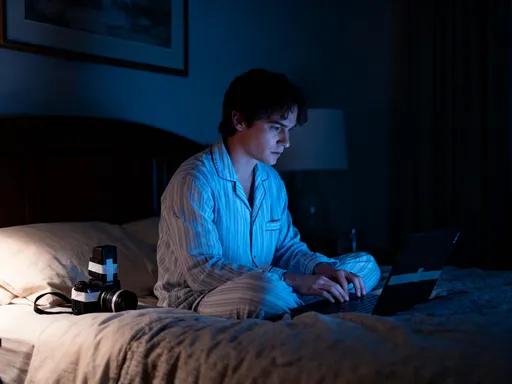
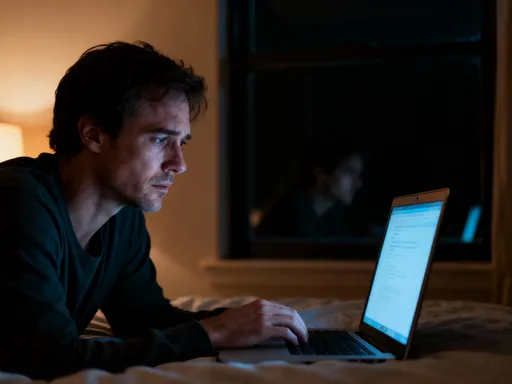
For years, I thought I was being responsible. When the kids were asleep, the dishes were done, and the house was quiet, I’d sit back down at my laptop. Just to 'finish up.' A few emails. A quick look at tomorrow’s to-do list. One last check of my calendar. But one thing always led to another. Before I knew it, my eyes were dry, my shoulders were tight, and the clock read 1:30 a.m. I wasn’t winding down—I was winding myself up.
What I didn’t realize then was that I wasn’t actually working. I was performing. Performing the role of the ‘on-it’ mom, the reliable employee, the organized planner. But none of it was moving me forward. In fact, it was pulling me backward—into exhaustion, irritability, and that constant low-grade anxiety that whispers, you’re falling behind. My body was tired, but my brain was still buzzing with half-finished thoughts and open browser tabs. I’d crawl into bed already defeated, knowing I’d do the same thing tomorrow.
And it wasn’t just me. So many women I talk to—moms, freelancers, part-time workers, full-time caregivers—tell me the same story. The day belongs to everyone else. The night is the only time they feel like they can breathe, think, or get anything done. But instead of rest, we trade sleep for screen time, thinking we’re being productive when we’re really just avoiding the discomfort of stopping. The laptop becomes a crutch, a companion, a confessional booth where we dump our worries in the form of endless task lists and unread messages.
Here’s the hard truth: when work follows you to bed, rest never stands a chance. And without real rest, everything else—your energy, your mood, your patience, your creativity—starts to crumble. I was giving my best hours to my worst habits. And the worst part? I didn’t even know it… until I saw it with my own eyes.
The Wake-Up Call: Watching Myself Waste Time
The idea came to me on a Monday morning, bleary-eyed and defeated. I’d stayed up until 1:45 a.m. again, ‘working,’ and now I was paying for it. My coffee wasn’t helping. My daughter kept asking me the same question three times. I felt foggy, frustrated, and so, so tired of feeling this way. That’s when I remembered a podcast I’d listened to months ago—something about using screen recordings to improve focus. I thought it was for YouTubers or tech reviewers. But what if I tried it for myself? Not to make content, but to make change.
That night, I did something different. Before I opened my laptop, I started the screen recording feature on my MacBook. No big announcement. No pressure. Just press record and go. I told myself I wouldn’t watch it—just in case it made me feel worse. But the next morning, curiosity got the better of me. I clicked play, sipped my coffee, and watched.
What I saw was not the image I had of myself. I didn’t see a focused, efficient woman getting ahead. I saw someone distracted, overwhelmed, and stuck in loops. I opened my email, clicked on one message, then got sidetracked by a news headline in the sidebar. I opened three browser tabs—‘budget templates,’ ‘meal planning ideas,’ ‘back pain stretches’—none of which I actually read. I switched between a half-written document and a spreadsheet, making zero progress on either. And then, at 11:22 p.m., I fell into a 20-minute YouTube spiral about 1970s kitchen design. Twenty minutes. On cabinets I’ll never own.
I sat there, stunned. That wasn’t productivity. That was panic. That was my brain looking for escape routes because the real work felt too heavy, too vague, too much. The screen recording didn’t yell at me or shame me. It just showed me the truth. And sometimes, the truth is the only thing that can wake you up. In that moment, I realized: I can’t fix what I can’t see. And for the first time, I was seeing it all.
How Screen Recording Became My Mirror
I’ll be honest—I didn’t expect a screen recording to feel so personal. It wasn’t like looking in a mirror. It was like watching a documentary about my own life, narrated by silence and mouse clicks. There was no filter, no excuse, no ‘I was just organizing my thoughts.’ The footage didn’t care about my intentions. It only showed my actions.
What surprised me most was how quickly the patterns emerged. In just one 45-minute session, I noticed that every time I hit a mental block—like not knowing how to start a sentence or feeling unsure about a decision—I’d immediately reach for distraction. Open a new tab. Check my phone. Scroll through Instagram. It was like a reflex, automatic and invisible—until it wasn’t. The recording made the invisible visible.
I also saw how often I confused motion with progress. Moving things around, reorganizing files, making lists of lists—that felt like work, but it wasn’t moving me forward. It was busywork. And busywork is the enemy of real accomplishment. I was using it to avoid the discomfort of deep thinking, of making decisions, of facing the fact that some tasks just take time and can’t be rushed.
But here’s what changed: once I could see these habits, they lost their power over me. It’s like when you finally name a fear—it becomes smaller, more manageable. I wasn’t lazy. I wasn’t broken. I was just human, reacting to stress and uncertainty in the ways I knew how. The screen recording didn’t make me feel worse about myself. It made me feel more compassionate. And from that compassion, I found motivation—not to punish myself, but to protect myself.
From Awareness to Action: Building a Better Routine
Knowledge without action is just another form of clutter. So I decided to do something with what I’d learned. I started small. Every day, I’d record just one work session—usually my last hour of focused time. Then, the next morning, I’d watch it with a notebook in hand. I didn’t grade myself. I just observed. I asked simple questions: Where did I lose focus? What pulled me away? What actually got done? When did I feel stuck? When did I feel in flow?
After a week, clear patterns emerged. I realized I was most focused in the first 90 minutes after I sat down to work. After that, my energy dipped, and distractions took over. So I made a new rule: protect the first 90 minutes like it’s gold. No email. No phone. Just one task, one document, one goal. I’d close everything else and set a timer. And when the timer went off, I’d take a real break—walk around, stretch, drink water, look out the window. No screens.
I also started ending my workday differently. Instead of closing my laptop at midnight with a sense of dread, I began wrapping up with intention. I’d spend 10 minutes reviewing what I’d actually accomplished, not what I’d hoped to do. Then, I’d write down just three priorities for the next day. Simple. Clear. Doable. That small ritual gave me closure. It told my brain: It’s okay to stop. You’ve done enough.
And slowly, something shifted. I started closing my laptop earlier—not because I was forced to, but because I felt done. The work that used to spill into the night was getting done in the daylight. My evenings became quieter, calmer. I’d read a book. Talk to my partner. Sit outside. And when bedtime came, I wasn’t fighting the urge to check ‘just one more thing.’ I was ready to rest.
The Ripple Effect: More Sleep, More Energy, More Life
The first time I woke up before my alarm, I thought my phone had died. But no—my body had reset. I’d gone to bed at 10:30 p.m., not because I had to, but because I was actually tired in a natural way. And I’d slept deeply, without waking up to check the time. When I opened my eyes at 6:15 a.m., I didn’t feel groggy. I felt… ready.
That morning, I made coffee and sat at the kitchen table—no phone, no laptop, no rush. I just sipped and watched the light come through the trees. I thought about how long it had been since I’d had a moment like that. Not rushed. Not distracted. Just present.
And that became the new normal. Better sleep didn’t just give me more energy—it gave me more of myself. I was less reactive. Less impatient. More patient with my kids, more present with my partner, more kind to myself. I started taking walks in the morning, not to ‘burn calories,’ but because I enjoyed the quiet. I had ideas again—real ideas, not just survival-mode thoughts. My creativity, which I thought had vanished under the weight of daily stress, started to return.
My family noticed. My daughter said, ‘You’re not yelling as much.’ My partner said, ‘You seem lighter.’ And they were right. I wasn’t just sleeping more—I was living more. The screen recording didn’t just change my work habits. It changed my relationship with time, with rest, with myself. I wasn’t just getting things done. I was starting to enjoy my life again.
How to Try This Without Overthinking It
If you’re thinking, This sounds good, but I don’t have time to record and watch myself—I get it. That was me too. But this doesn’t have to be complicated. You don’t need special software or a fancy setup. Just use the screen recorder that’s already on your device. On a Mac, it’s in the Control Center. On a Windows laptop, it’s in the Xbox Game Bar. On an iPhone or iPad, it’s in the Settings under Control Center. It takes 10 seconds to turn on.
Start with just one session a week. Maybe your first hour of work. Maybe your last. Press record. Do your normal thing. Then, the next day, watch it—no judgment, no pressure. Just observe. Ask yourself: Where did I lose time? What kept pulling me back? What actually moved me forward? Take one small note. That’s it.
Don’t do it every day. Don’t turn it into another chore. The goal isn’t perfection. It’s awareness. And from awareness, better choices grow. Maybe you’ll notice you’re most distracted after lunch. Great—take a real break instead. Maybe you’ll see that you spend 30 minutes every day just opening and closing the same file. Okay—what’s blocking you? What do you need to feel ready to start?
The power isn’t in the recording itself. It’s in the clarity it brings. And clarity is the first step toward change. You don’t have to overhaul your life. You just have to see it clearly. Once you do, the right next step will find you.
Why This Isn’t Just About Productivity—It’s About Peace
I used to think productivity was about doing more—more tasks, more hours, more hustle. But now I see it differently. Real productivity is about doing what matters, then stopping. It’s about finishing your work so you can truly begin your rest. It’s about creating space for stillness, for connection, for joy.
Screen recording didn’t turn me into a robot. It helped me become more human. It showed me where I was running on empty, where I was avoiding hard feelings, where I was mistaking busyness for purpose. And once I saw it, I could choose differently.
Today, I go to bed earlier—not because I have to, but because I want to. I’m not afraid of tomorrow’s to-do list because I’ve already faced today’s. I sleep better. I wake up easier. I feel more like myself. And that, more than any email sent or task checked off, feels like real success.
This isn’t about grinding harder. It’s about living better. It’s about using technology not to trap us, but to free us. To help us see the truth, make kinder choices, and reclaim our time, our energy, our peace. Because you don’t have to choose between being responsible and being rested. You can be both. You just need to see the path first. And sometimes, all it takes is pressing record.